The story goes back to the times when Buckhead, now a very high profile financial and residential district of Atlanta, was still known as Irbyville. Around the 1840s, Henry Irby, a rich white man, the owner of Irbyville, and a passionate hunter, killed a large buck deer and placed his head on the crossroad between Peachtree Street and Piedmont Road. As there was almost nothing remarkable in the great area of Irbyville, people started calling it Buckhead.
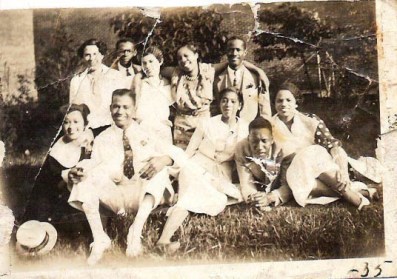 After the Civil War and the Emancipation of the slaves, many free black people settled in Buckhead. They built simple houses in a small sector, named Macedonia Park, and worked in the surrounding plantations or as home maids for wealthy whites. The residents of Macedonia Park were quiet and hard working people. According to Buckhead historian Bill Bell, they earned about $450 per year. In their thriving community, there were three churches; three restaurants, where visitors were served pot roasts; two grocery shops, owned by Mamie German and William Bagley, where their white neighbors bought bread and fruits; and a blacksmith shop owned by William Bonner.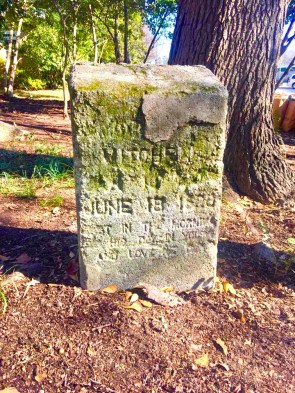
The Mount Olive Methodist Church, founded in 1870, was the first and was very crowded on Sundays. Mount Olive Cemetery was established in its yard. The other two churches were Macedonia Baptist Church and the White Lily Baptist Church. Life was pretty normal for the residents of Macedonia Park, whose numbers reached 400 households. However, the terror of Ku Klux Klan wasn’t unknown in the area. As late as the 1930s, there was evidence of the presence of the Klan in Buckhead. In her book, “Buckhead: Place for All Time”, the author Susan Kessler Barnard quotes Parthenia Jetter, a black woman who lived in Macedonia Park, who remembered Ku Klux Klan’s marches on Pharr Road. Ms. Jetter said that Klansmen marched on Saturdays to clean the streets from blacks so whites would go shopping alone. “When we heard they were coming, we hid at home.”
 In the 1910s, 20s, and 30s, Buckhead became a desired destination. More and more people moved to it and by the 1940s, Macedonia Park was totally surrounded by white neighborhoods including Garden Hill. In 1942, the residents of Garden Hill petitioned the Fulton County Board of Commissioners requesting the removal of Macedonia Park as a “menace” to the welfare of surrounding neighborhoods. There were no registered allegations of crime such as rape, theft, or murder. The only complaint was that black residents of Macedonia Park were too noisy.
Between 1945 and 1953, through coercive negotiations or eminent domain, Fulton County acquired and demolished all of the homes in Macedonia Park. Residents received anywhere between $0 and $5,000 for their property. A huge public park replaced this black neighborhood. The only evidence of its existence that remained was Mount Olive Cemetery with approximately 120 graves. 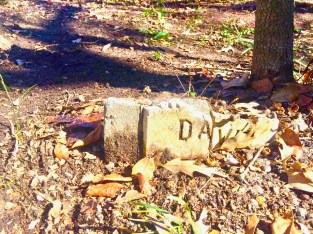
In the beginning, the park was known as Bagley Park. There is a small controversy around the origin of this name. In her book, “Buckhead: Place for All Time”, Susan Kessler Barnard said that it was attributed to Charles Bagley, an African American businessman originally from Cumming, GA, who was forced to leave it and later became a resident of Macedonia Park. Elon Butts Osby, a granddaughter of William Bagley, insisted that her grandfather was forced out of Forsyth County in 1912. A security note from 1928 showed that he had purchased 6 lots in Macedonia Park for the amount of $2,100. According to her, her grandfather was considered like a mayor, a kind of informal leader of the neighborhood. Although it is  still unclear whether Charles Bagley and William Bagley are the same individual or are related in some way, they both were African Americans, they both were expelled from Forsyth County, and they both were prominent businessmen in Macedonia Park.
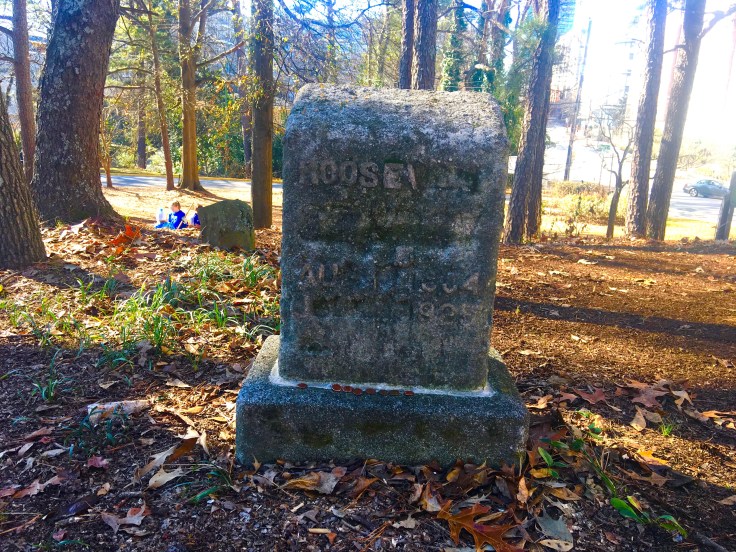
In the early 1980s, the park was renamed after Frankie Allen, a baseball umpire and popular sport figure. The small Mount Olive Cemetery remained within the borders of this park, next to the administration office, just in front of the entrance of the tennis courts. It was vandalized many times and no action was taken for its protection. 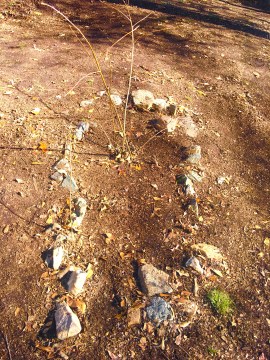
Due to a clerical error in 1999, Fulton County started to impose property taxes against the cemetery and when the taxes went unpaid, they placed a tax lien, and in 2006 sold the property to the Stone Mountain developer Brandon Marshall for $59,000. In 2009, he officially asked the Atlanta City Council for permission to remove the graves and put them in a private cemetery in Decatur. Later in 2009, Elon Butts Osby, the granddaughter of William Bagley, filed a lawsuit in Fulton County Superior Court to stop the removal of the graves. Ms. Osby argued that Mount Olive Cemetery was dedicated to the public and could not be used for any other purposes. Mr. Marshall, on the other hand, claimed that this cemetery was private and could be removed.
In March 2010, the Atlanta City Council voted to deny the removal of the graves. However, Brandon Marshall filed a lawsuit against the city. The court battle continued for several years before the judges decided that Mount Olive Cemetery had historic importance that must be preserved, and defined Buckhead Heritage Society as its guardian.
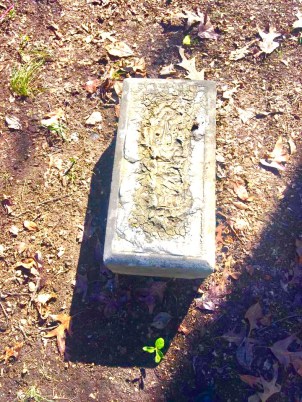
In 2015, the Society launched a project for restoration and preservation of the cemetery. The scientists conducted an archaeological investigation using probing and GPR (Ground Penetrating Radar) and identified 45 of the original 120 graves in it. A small portion of 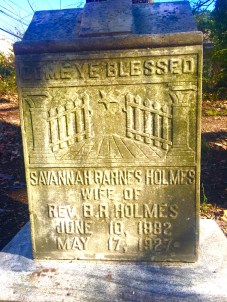 them are marked with gravestones, only 2 of the gravestones are legible.
The first one belongs to Savannah Barnes, a graduate from Morris Brown University and a teacher at Holmes Institute in downtown Atlanta. She was married to Rev. B. R. Holmes who was the president of this institute for homeless children. The open book on the top of her marble gravestone symbolizes her education. The open gate and the star above her name represents heaven and is a tribute to her dedicated work for the good of the community.
The second one belongs to Essie Davis, a young woman who died in her 20s. The heart surrounding her name 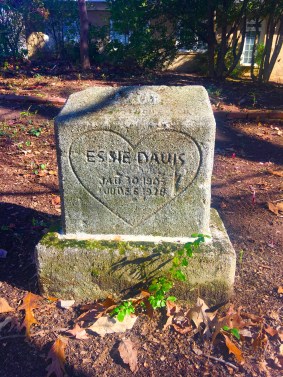 indicates that she had gone from being surrounded by her parents’ love to rest in God’s love. On the top of the gravestone, there is a drawing of a lamb, a symbol of her innocence. Essie Davis was a widow, her husband Matthew Davis was buried in the same cemetery in 1925.
William Bagley was buried in Mount Olive Cemetery in 1939, too. His wife Ida joined him in 1945. The earliest documented funeral was the one of the formal slave Lulu Williams in 1918. “She was one of these old men and women, remnants of the Civil War and Reconstruction days, who are rapidly passing into the great beyond,” said Rev. B.R. Holmes at her service.
Mount Olive Cemetery has both personal and historic value. Its existence and preservation is important for the descendants of the residents of Macedonia Park because it is part of their family history, the memory of who they are. The cemetery has its historic importance because it shows how this group of former slaves managed to re-establish their lives as free citizens, to start from zero, and actually be successful.
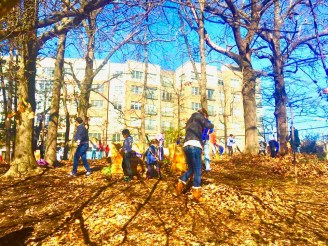 However, I believe that the story of the destruction of Macedonia Park is equally important and the memory of it should not die. Its black residents were forced out of their homes by their white neighbors and their houses were demolished. The park that replaced the neighborhood was named after a prominent black person, but it didn’t last long. It was re-named after a white guy. The only evidence of the existence of this small peaceful group of former slaves was the cemetery and it was neglected, vandalized, and almost removed by whites.
Now, Mount Olive Cemetery is in good hands. Buckhead Heritage Society is in charge of its preservation and restoration, and gives us hope that nothing is forgotten and nobody is forgotten.
 Maria S. Topalova Blog
Leave a comment