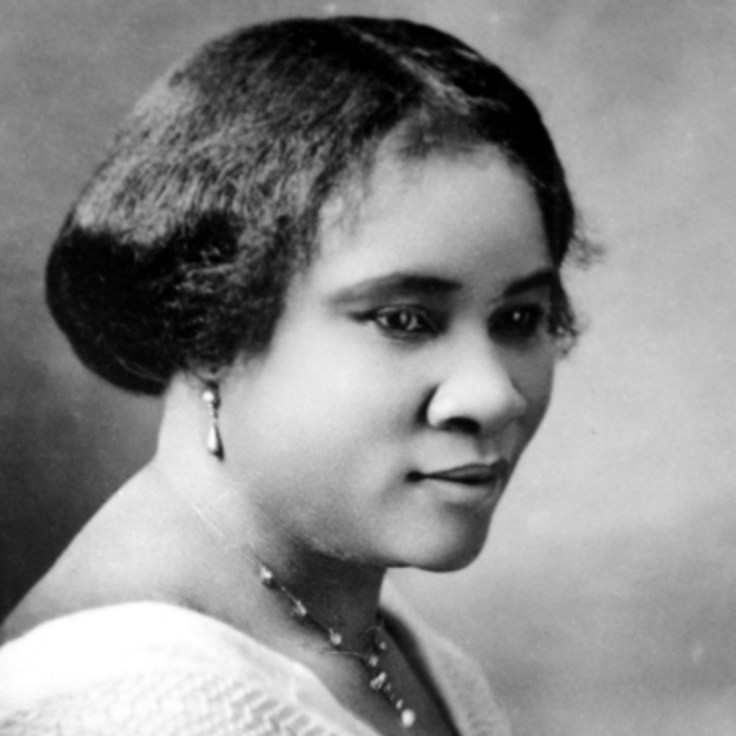
 If somebody could personify the saying “from rags to riches”, this person for sure would be Madam CJ Walker. She started her life from the lowest possible point, on a cotton plantation in the deep South, to become a successful entrepreneur, social activist, and game changer for African Americans during one of the darkest periods in their history. Soon, she will make her way to Hollywood, too.
 Madam CJ Walker was born in 1867 as Sarah Breedlove on a Delta, Louisiana plantation, the same plantation where her parents were enslaved before the Civil War. By the age of 7, both her parents had died. At the age of 14, to escape mistreatment from her brother-in-law, she married her first husband Moses McWilliams. When she was 18, her first and only daughter Lelia, who later changed her name to A’Lelia, was born. At the age of 20, her husband died. There have been rumors that he was lynched; however, there is no evidence for that or for any other causes for the death.
When she became a widow, Madam CJ Walker moved to St. Louis to live with her three brothers who were already established as barbers there. At around 1890, due to her poor diet and bad hygiene habits, she began to suffer from massive hair loss. At that time, she worked at a laundry for $1.50 per day. Her food was scarce, and she washed her hair once a month, and never during the winter. She was ashamed of her hair loss, and started to experiment with different soaps and products on her hair, mixing them in different ways, and adding ingredients. The improved diet and hygiene, coupled with the right products soon gave visible results.
 The market for such products was big enough because hair loss was common among black women at that time. In the beginning, Madam CJ Walker started to sell her products door-to-door herself, then her daughter A’Lelia joined her, then she began to train other women how to sell the products. In 1905, she married her third husband Charles Joseph Walker, who suggested she establish her own company. At that time, she changed her name to Madam CJ Walker.
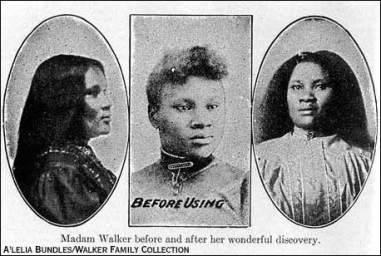
Inspired by her personal hair loss, Madam CJ Walker discovered the formula for healthy hair that is valid until today – nutritious diet, regular washing, and specialized products. In the early 20th century, she realized the power of advertising, and used it to enlarge her market share. Printing her personal photos on her products, she was the first one to introduce the “before and after” type of advertisement.
Through the years, Madam created a chain of beauty schools and beauty salons in many states, and built her own factory where she produced 10 different hair products. Her company had branches in the Caribbean islands, Costa Rica, and Panama. By the time of 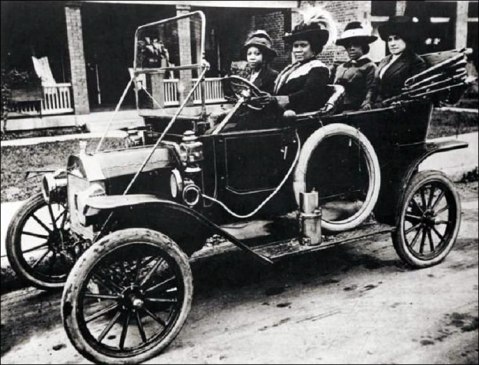 her death in 1919, her company’s wealth was estimated between 500,000 and 2 million dollars, and her personal wealth (houses, cars, jewelry, etc) was estimated around $600,000. She was the first black self-made millionaire woman in American history.
Her business achievements go far beyond just successfully selling hair products. At a time when black women were the object of racial discrimination, prejudices, and neglect, she taught them that they were beautiful, and deserved to have long, shiny hair, and well-maintained nails and hands. And not only that. She promised them that if they sold her products and worked for her, they could also become wealthy. While the average weekly salary in the US was $10, her agents earned $60 and even $100 per week.
Madam CJ Walker had no official education. She taught herself how to read and write. However, she loved the arts, poetry, music, films, and theater. In 1916, she moved to Harlem, New York, where she became an important part of the African-American cultural elite. People like the poet Langston Hughes and violinist Joseph Douglass, grandson of Frederick Douglass, were among her closest friends.
Madam CJ Walker strongly felt that if she made her personal story known, it would empower many other women to fight for success. In 1912, she attended the National Negro Business League convention, and a couple of times approached its founder Booker T. Washington with the request to include her in the official program. Although Washington knew who she was, he wasn’t sure how worthy she was, and refused her requests. Madam decided to speak from the floor, and said, “First, I was promoted to a cotton field worker. Then, I was promoted to a laundry worker. Then, I was promoted to a cook. Then, I promoted myself to my own factory, built on my own ground.” At the next year’s convention, Booker T. Washington invited her to be the key-speaker.
A large part of Madam CJ Walker’s legacy is her charity work to put an end to the racial inequality in the US. She was the largest single donor to the National Association for Advancement of Colored People, and was personally involved in the struggle for anti-lynching legislation. She donated a large amount of money for the creation of the first YMCA center for black people in Indianapolis, Indiana, and supported many black artists, poets and musicians in Harlem, New York.
 The first African-American woman to become a self-made millionaire died at the age of 52. Her company suffered a lot during the Great Depression, and steadily lost its competitiveness. Today, her products are not part of the mainstream beauty market.
However, the story of Madam CJ Walker is as charming, touching, and inspiring as it was a century ago. She is a perfect example of W.E.B. Du Bois’s “Talented Tenth” theory, and of the responsibility the elite have to improve the life of ordinary people. As a genuine leader, a restless fighter, and an influential woman, she truly deserves her Hollywood “coronation” in the upcoming movie with actress Octavia Spencer in the role of Madam CJ Walker.
 Maria S. Topalova Blog
Leave a comment