 Being raised in a communist Eastern European country is a hard way to start somebody’s life. Permanent deficiency of food and proper clothing, arrogant authorities who oppress any kind of opposition and independent thinking, zero freedom of speech accompanied by fear of arrest and punishment, and very limited hope for change in your lifetime are just a few of the characteristics of life during Communism. How much harder could it be? This was the question many of us, including me, were asking ourselves.
It came natural to me to to be interested in another aggressive and brutally unfair regime – the one of Slavery in the USA. I researched Harriet Ann Jacobs’s narrative “Incidents in the Life of a Slave Girl” and “Narrative of the Life of Frederick Douglass, an American Slave”, two documents that give a first-hand description of the darkest period in American history. The authors of these documents were born slaves and lived for many years in bondage before they managed to escape from the chains of the slaveholders and dared to tell publicly their stories.
Communism and Slavery have some common features, such as merciless exploitation of the labor force that benefits few in society, cruel punishment and torture for every sign of disobedience, the role of religion as a justifier of the injustice, and judiciary that punish the victim and not the criminal. However, there are some fundamental differences between Communism and Slavery. The former was ideologically driven, and the latter was racially driven. Education was accessible in communist countries, while slaves were totally deprived of education. Communism had no respect for human rights, however citizens were not the objects of auctions and couldn’t be sold or bought. On the contrary, slaves were considered chattel and property of the slaveholders and could be sold and bought whenever their masters were pleased to do so.
Harriet Ann Jacobs, who had an opportunity to travel to England after she escaped Slavery, describes very well the difference between the European poor and the slaves. “They labored hard; but they were not ordered out to toil while the stars were in the sky, and driven and slashed by an overseer, through heat and cold, till the stars shone out again. Their homes were very humble; but they were protected by law…The father, when he closed his cottage door, felt safe with his family around him. No master or overseer could come and take from him his wife, or his daughter…Much was being done to enlighten these poor people. Schools were established among them, and benevolent societies were active in efforts to ameliorate their condition. There was no law forbidding them to learn to read and write.” Of course when Jacobs speaks about European poor, she has in mind the poor in pre-industrial England. Communism emerges in the pre-industrial times with the aim to protect the poor but later evolves as an instrument of brutal exploitation of the same poor it pretends to protect.
 In his narrative, Frederick Douglass makes the point that there are differences in the treatment of the slaves in cities and in plantations, “A city slave is almost a freeman, compared with a slave on the plantation. He is much better fed and clothed, and enjoys privileges altogether unknown to the slave on the plantation. There is a vestige of decency, a sense of shame, that does much to curb and check those outbreaks of atrocious cruelty so commonly enacted upon the plantation. He is a desperate slaveholder, who will shock the humanity of his non-slaveholding neighbors with the cries of his lacerated slave. Few are willing to incur the odium attaching to the reputation of being a cruel master; and above all things, they would not be known as not giving a slave enough to eat.”
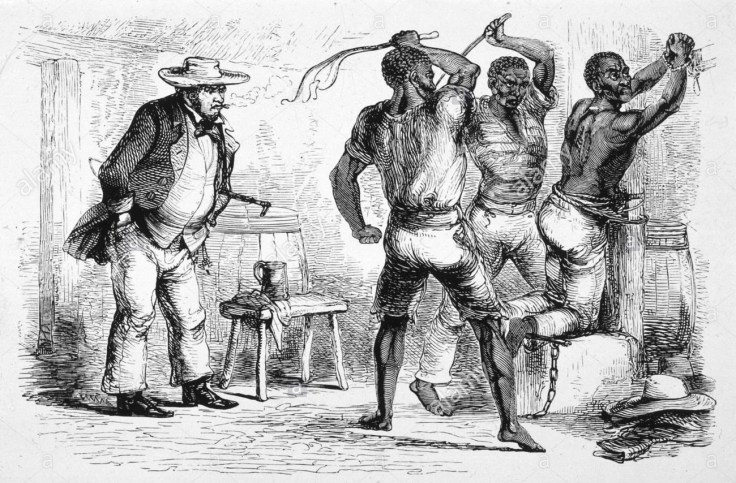
Both Harriet Ann Jacobs and Frederick Douglass give us many heartbreaking details about the torture practices in the American South during Slavery. As she correctly points out, some of the examples are so cruel and harsh that it’s difficult to believe they are told with no exaggeration. “Those who never witnessed such scenes can hardly believe what I know was inflicted at this time on innocent men, women, and children, against whom there was not the slightest ground for suspicion,” Harriet Ann Jacobs writes. Readers can find countless cases of torture in her narrative, such as the story of a young slave named Luke. Although his disabled master was totally dependent on him, he whipped him every day just for pleasure. At some point this perverse man realized that because of his disability, his arms are not strong enough to use the lash as heavily as he wanted. The master hired a servant just to whip poor Luke in front of him so he would enjoy the suffering of the young slave.
Frederick Douglas himself was a subject of physical torture. Like Harriet Jacobs, he recalls many cases. One of them is about two sisters Henrietta, 22 years old, and Mary, 14 years old. “Mrs. Hamilton used to sit in a large chair in the middle of the room, with a heavy cowskin always by her side, and scarce an hour passed during the day but was marked by the blood of one of these slaves. The girls seldom passed her without her saying, “Move faster, you black gip!” at the same time giving them a blow with the cowskin over the head or shoulders, often drawing the blood. She would then say, ‘Take that, you black gip!’– continuing, ‘If you don’t move faster, I’ll move you!’ Added to the cruel lashings to which these slaves were subjected, they were kept nearly half-starved. They seldom knew what it was to eat a full meal. I have seen Mary contending with the pigs for the offal thrown into the street. So much was Mary kicked and cut to pieces, that she was oftener called ‘pecked’ than by her name.”
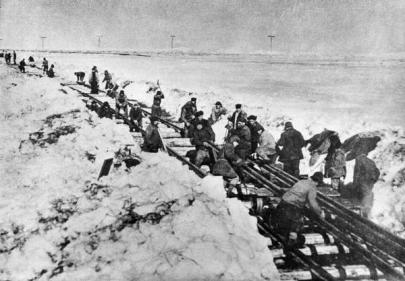 The situation in the communist labor camps was similar. “Hunger was overwhelming. We had the right of 10kg (around 22 pounds) food for 4 months. Even if you just lick this 10 kg, they are not enough for 4 months… We were 420 people living in a cabin long 80 meters (around 262 feets). Walls were made of oak, and the roof of straw and patup. The cabin was full with rats as big as small cats…,” Todor Shalev tells the investigative journalist Christo Christov, the editor-in-chief of the website for the crimes of Communism www.dsbg.com Shalev spent years in the labor camp Belene, North Bulgaria, just because he dared to question some of the decisions of the communist leadership.
“The winter of 1949 was one of the coldest, the temperature reached – 34C (around – 29 Fahrenheit). Every morning we were transported in an open truck to an iced river where we had to take out sand and load it on a train…We weren’t allowed to wear gloves or jackets while we were working…We were guarded with soldiers and specially trained dogs. If you slipped, the overseer hitted your head with the gun stock,” Dimitar Sirakov testifies during his conversations with Christov. He is another inhabitant of Belene camp.
In Bulgaria, the situation with the food wasn’t much different for the general population. As there was shortage of food, the government introduced the so-called “coupon system.” With the coupons, it limited the amount of goods people could buy. On the other hand, it didn’t guarantee that even if you had a coupon, there would be enough food to buy for everybody. Hunger was part of people’s lives.
Torture wasn’t limited to the labor camps either. Just for the first several months after communists took power in the country, between 30 and 40 thousand people were murdered by the authorities without trials and justice. The communist militia had its own methods of punishment. People were captured without any legal order, they were put in jail, deprived from sleep, constantly beaten, delicate parts of their body been burned. Those who didn’t break and resisted, were hung without trial or any kind of legal procedure.
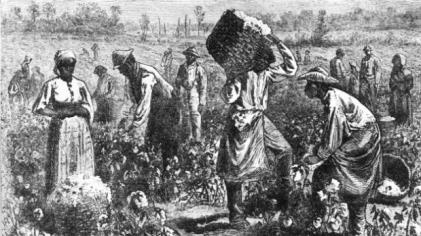
There is enough historical evidence that Slavery had a solid economic base because it provided free labor and created fortune for the slaveholders. Cotton and rice were the petroleum of the 19th century, and planters of the American South made a lot of money from the exploitation of the slaves. You can find more details about the economic profits of the slaveholders in my previous article on Slavery. Both Harriet Jacobs and Frederick Douglass spoke openly about how slaveholders benefited economically from the free labor of the slaves. Jacobs was deeply disgusted that, after many years of free labor, slaves had to pay big amount to the owners to buy their own freedom. If they were lucky enough. Douglass, who worked at a shipyard, had to give all his money to his master, “I was now getting, as I have said, one dollar and fifty cents per day. I contracted for it; I earned it; it was paid to me; it was rightfully my own; yet, upon each returning Saturday night, I was compelled to deliver every cent of that money to Master Hugh. And why? Not because he earned it,–not because he had any hand in earning it,– not because I owed it to him,–nor because he possessed the slightest shadow of a right to it; but solely because he had the power to compel me to give it up. The right of the grim-visaged pirate upon the high seas is exactly the same.”
 Both Slavery and Communism failed not just because they were deeply inhuman and wrong, but because they weren’t economically sustainable. The planned communist economy was unproductive and depended on external supply. As Ken Burns shows in his documentary “The Civil War”, the goods produced in all Confederate states were less than those produced in the state of New York alone. Advanced enterprises in the Northern states needed educated workers and not illiterate slaves.
Religion and the institution of church is another similarity between Communism and Slavery. Instead of protecting and comforting the victims of the injustice, priests use religion as an instrument of suppression. But they did this in different ways. These are the words of a priest to slaves in the aftermath of Nat Turner’s rebellion, as we read them in Harriet Jacobs’s narrative: “You are rebellious sinners. Your hearts are filled with all manner of evil. ‘Tis the devil who tempts you. God is angry with you, and will surely punish you, if you don’t forsake your wicked ways. You that live in town are eye-servants behind your master’s back. Instead of serving your masters faithfully, which is pleasing in the sight of your heavenly Master, you are idle, and shirk your work. God sees you. You tell lies. God hears you.” No signs of mercy, compassion or courage.
Frederick Douglass also speaks about the hypocrisy of the church and states that the most merciless and cruel masters were at the same time the most religious ones. One of his masters went to a Methodist camp, and this is how the writer describes the effect of the church on his master: “It neither made him to be humane to his slaves, nor to emancipate them. If it had any effect on his character, it made him more cruel and hateful in all his ways; for I believe him to have been a much worse man after his conversion than before. Prior to his conversion, he relied upon his own depravity to shield and sustain him in his savage barbarity; but after his conversion, he found religious sanction and support for his slaveholding cruelty.”
In the communist Bulgaria, the main religion was Christian Orthodox. Church was not forbidden; however, people were not welcome to the religious services. “The goal of the communist regime was to diminish the church, and to erase it as a public institution. To do so, the regime recruited spies among the priests and integrated them within the communist party. Close ties between the regime and the church undermined its image as an independent institution. People viewed it as a part of the regime, and didn’t trust it,” the historian Momchil Momchilov writes in his book “Between Faith and Compromise”.
The regime didn’t view with a tolerant eye religious citizens either. For everyday life, it meant that weddings in the church were vastly replaced by civil ceremonies. Baptisms were kept secret between the very close family circle and a trusted priest. People were afraid to attend services in church because very often the priests were those who reported them to the regime. Christianity was not a part of the school curriculum. Very few people dared to wear in public a cross or any other religious symbol. If somebody was suspected of being religious, the regime destroyed his public reputation. He might be questioned by the militia, put in jail, or sent to a labor camp.
 Both Slavery and Communism are not famous for their respect to justice. “O virtuous reader! You never knew what it is to be a slave; to be entirely unprotected by law or custom; to have the laws reduce you to the condition of a chattel, entirely subject to the will of another,” Harriet Jacobs writes. She speaks with bitterness and anger about the unfair judiciary of Slavery where even marriage between slaves had no legal meaning. “The reader probably knows that no promise or writing given to a slave is legally binding; for, according to Southern laws, a slave, being property, can hold no property,” the writer says. She gives numerous examples of broken promises of masters to slaves just within her own family. Her great grandmother, her grandmother, her mother, her uncles and aunts, and she herself were victims of broken promises to be given freedom.
Frederick Douglass also speaks about various cases of obvious injustice in the plantations, where beating to death and killing slaves was common practice. “Killing a slave, or any colored person, in Talbot county, Maryland, is not treated as a crime, either by the courts or the community. Mr. Thomas Lanman, of St. Michael’s, killed two slaves, one of whom he killed with a hatchet, by knocking his brains out. He used to boast of the commission of the awful and bloody deed. I have heard him do so laughingly, saying, among other things, that he was the only benefactor of his country in the company, and that when others would do as much as he had done, we should be relieved of ‘the d–d niggers’.” This practice was normal for all Southern states.
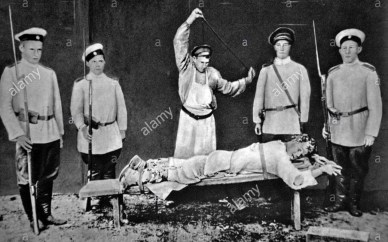 Bulgaria became part of the Soviet system after a military coup on September 9th, 1944. The historian Evelina Kelbecheva has collected evidence that just for the first 2 months after the coup, 28,600 people were murdered by the communists. This terror continued for 45 years. The estimated number of the victims of Communism in Bulgaria alone is around 800,000 people. Some of them were shot in the streets, others died after torture in jail, and many spent years in the labor camps.
The injustice of Communism was done in many different ways. I will give just one example: In 1947, the regime nationalized all private property in the country – money, factories, enterprises, shops, hotels, restaurants, banks, and homes became state-owned. No one had even a small chance to question this act in court. Family fortunes created for generations disappeared overnight. My mother and my uncle were little children in 1947. My grandparents put some money in their names in the bank, so when time came, they would be able to go to college. The regime took even this money from their children’s bank account.
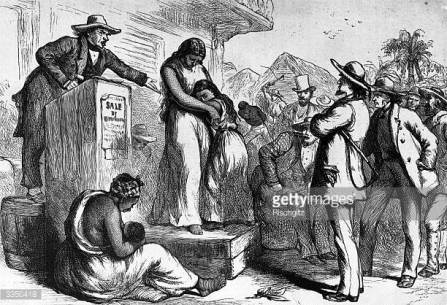
Although the inhumane nature of Slavery and communism has some similarities, there are some differences between them too. One of them is how they treated the institution of family. For me personally, one of the saddest parts of Harriet Jacobs’s narrative is the New Year day when slaves waited to be sold to new masters. Families were driven away, husbands and wives were separated, and children were taken from their mothers.
“To the slave mother New Year’s day comes laden with peculiar sorrows. She sits on her cold cabin floor, watching the children who may all be torn from her the next morning; and often does she wish that she and they might die before the day dawns. She may be an ignorant creature, degraded by the system that has brutalized her from childhood; but she has a mother’s instincts, and is capable of feeling a mother’s agonies. On one of these sale days, I saw a mother lead seven children to the auction-block. She knew that some of them would be taken from her; but they took all.” The whole life of Harriet Jacobs is actually a story of a mother trying to keep her children together and with her.
Frederick Douglas gives clear evidence of how family ties were destroyed under Slavery: “My mother and I were separated when I was but an infant–before I knew her as my mother. It is a common custom, in the part of Maryland from which I ran away, to part children from their mothers at a very early age. Frequently, before the child has reached its twelfth month, its mother is taken from it, and hired out on some farm a considerable distance off, and the child is placed under the care of an old woman, too old for field labor. For what this separation is done, I do not know, unless it be to hinder the development of the child’s affection toward its mother, and to blunt and destroy the natural affection of the mother for the child. This is the inevitable result. I never saw my mother, to know her as such, more than four or five times in my life; and each of these times was very short in duration, and at night. She was hired by a Mr. Stewart, who lived about twelve miles from my home. She made her journeys to see me in the night, travelling the whole distance on foot, after the performance of her day’s work. She was a field hand, and a whipping is the penalty of not being in the field at sunrise, unless a slave has special permission from his or her master to the contrary–a permission which they seldom get, and one that gives to him that gives it the proud name of being a kind master. I do not recollect of ever seeing my mother by the light of day.”
People suffered a lot under Communism; however, they weren’t considered chattel and weren’t sold at auctions. Mothers were raising their children, wives and husbands lived together unless they decided to divorce. The regime attacked families in a different way: When somebody was sent to exile, the whole family had to go with him. If a member of a family was known as hostile to the regime, the stigma stayed with this family for generations. Her or his relatives were not able to go to college, and weren’t allowed to get good jobs.
Education is another area where Communism and Slavery have completely different approaches. It is true that under the Soviet-type regime, the way history or literature were taught in schools was ideologically influenced. However, education was accessible for all.
This is not the case with Slavery. Frederick Douglass explains it brilliantly. When he is sent to Baltimore, his new mistress started to teach him how to read and write. When his master discovered it, he “at once forbade Mrs. Auld to instruct me further, telling her, among other things, that it was unlawful, as well as unsafe, to teach a slave to read. To use his own words, further, he said, ‘If you give a nigger an inch, he will take an ell. A nigger should know nothing but to obey his master–to do as he is told to do. Learning would spoil the best nigger in the world. Now,’ said he, ‘if you teach that nigger (speaking of myself) how to read, there would be no keeping him. It would forever unfit him to be a slave. He would at once become unmanageable, and of no value to his master. As to himself, it could do him no good, but a great deal of harm. It would make him discontented and unhappy’.”
The effect of these words on Douglass was tremendous. He realized how important education was and did his best to learn how to read and write alone. Later in his life, under the threat of severe punishment, he established a secret school for slave children and he himself taught them how to read and write.
Harriet Jacobs also learned herself how to read and write and helped other to do the same. “I knew an old black man, whose piety and childlike trust in God were beautiful to witness. At fifty-three years old he joined the Baptist church. He had a most earnest desire to learn to read. He thought he should know how to serve God better if he could only read the Bible. He came to me, and begged me to teach him. He said he could not pay me, for he had no money, but he would bring me nice fruit when the season for it came. I asked him if he didn’t know it was contrary to law; and that slaves were whipped and imprisoned for teaching each other to read. This brought the tears into his eyes. “Don’t be troubled uncle Fred,” said I. “I have no thoughts of refusing to teach you. I only told you of the law, that you might know the danger, and be on your guard.”
As a conclusion, both Slavery and Communism belong to the darkest periods of the history of our humanity. The way they treated people under their control was shameful and inexcusable. This part of our past shall never be repeated again. But it shouldn’t be forgotten either.
 Maria S. Topalova Blog
Leave a comment