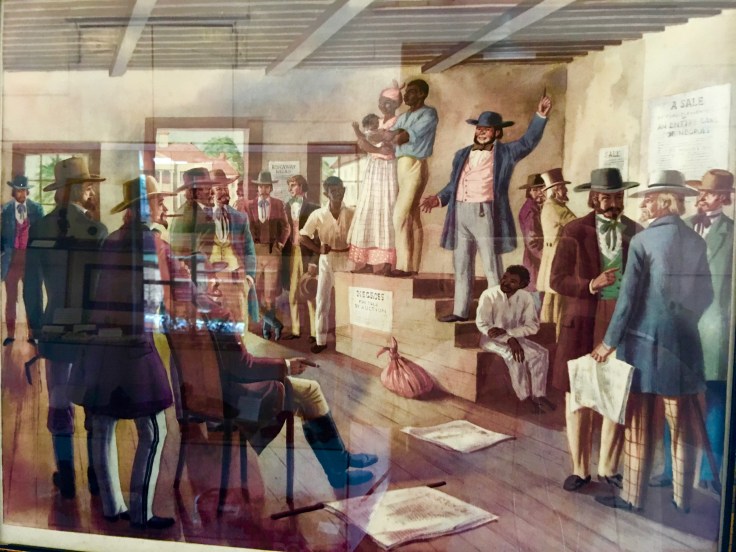
 Racism continues to be an ulcer in contemporary American society, and it can’t be properly addressed without an honest conversation on Slavery. Unfortunately, the American Revolution failed to abolish this grim and humiliating institution because, at that time, it was still economically extremely profitable; white people considered slaves as their property, and deeply believed that they are not intelligent enough to live as free citizens; and the so called “founding fathers” of the American nation were actually slave owners who either actively supported Slavery or assumed that slaves are lower quality people.
During the American Revolution (1765-1783), the only attempt to abolish the Slavery was made by the British Governor of Virginia Lord Dunmore. As we read in the letter of Abigail Adams to her husband John (the second President of the USA) from September 22, 1774, slaves signed “a petition to the Governor telling him they would fight for him provided he would arm them and engage to liberate them if he conquered.”
 Although in the rough draft of the Declaration of Independence, he sharply criticized King George III for creating and sustaining the slave trade, Thomas Jefferson did not make the radical step to ask for abolishment of the Slavery. On the contrary, he disputed the moral right of the British King to free the enslaved soldiers. “…he is now exciting those very people to rise in arms among us, and to purchase that liberty of which he had deprived them.”
At the time of the American Revolution, the Slavery was still economically very profitable. The free black labor created fortunes for the white planters. In 1757, Reverend Peter Fontaine defended Slavery in Virginia with the help of simple arithmetic. He pointed out that there was no set price for their products like corn, wheat and, other provisions, and the planters had to look for the cheapest option. “A common laborer, white or black, if you can be so much favored as to hire one is 1 Sterling… per day; a bungling carpenter 2 Sterlings per day;… add to this 7 Sterlings or 8 Sterling more and you have a slave for life.”
For the white masters, slaves were property. The owners didn’t have any moral remorses because, as they often argued, blacks were already enslaved by other blacks before they were sold to planters in the colonies. One pro-slavery petition in Virginia from 1785 insisted that “in the Old Testament… slavery was permitted by the Deity himself.” In another petition in Virginia signed by 161 people, the slave owners stood firm that “the most valuable and indispensable Article of Our Property is our SLAVES.” They “solemnly adjure humbly pray that you will discountenance and utterly reject every motion and proposal for emancipating our slaves.”
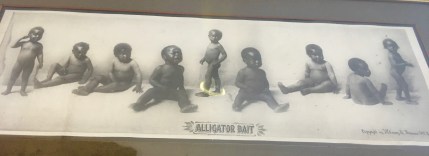 White planters were convinced that slaves are not capable to live and survive as free citizens. In the article “The Limits of Antislavery thought in the Revolutionary Lower South: John Laurens and Henry Laurence”, published in Journal of Southern History, the author Gregory D. Massey described the phenomenon of so called “conditional terminators, who are willing to act against slavery only when time and circumstances were right. Because slaves were a majority of South Carolina’s population and formed the bedrock of the economy the proper conditions to emancipation did not exist.” In addition, he wrote that, “Even those who questioned morality of slavery held the racist attitude that blacks were of inferior nature,” and reminded that “men like Thomas Jefferson agreed that resettlement of blacks outside America, must accompany the end of slavery.”
In the connection with the Slavery, the figure of Thomas Jefferson is a very indicative example. The third President of the USA who wrote the Declaration of Independence was actually a slave owner who had hundreds of slaves. He died at the age of 83, and during his long life, he gave freedom to only 3 slaves. In the Declaration, Jefferson proclaimed that “all Men are created equal” but he didn’t included slaves and women in this number. When in 1791, he was approached by Benjamin Banneker, a free black man who dared to challenge the legitimacy of Slavery, Jefferson wrote, “no body wishes more ardently to see a good system commenced for rising conditions, both of their body and mind, to what it ought to be, as far as the imbecility of their present existence, and other circumstances, which cannot be neglected, will admit.”
The first President of the USA George Washington shared the same views on Slavery. Being tobacco planter himself and slave owner, he honestly presumed that emancipation would “introduce more evils than it can cure.” In his letter to Robert Morris, Washington stated, “I hope it will not be considered from these observations, that it is my wish to hold the unhappy people, who are subject of this letter, in slavery. I can only say that there is not a man living who wishes more sincere than I do, to see a plan adopted for the abolition of it, but there is only one proper and effectual mode by which it can be accomplished and that is by Legislative authority; and this, as far as mu suffrage will go, shall never be wanting.”
Benjamin Banneker correctly said it in his letter to Jefferson that someone can understand “the horrors of (slavery) condition” only if you “put your soul in their souls.” Sadly, the “founding fathers of the American nation” failed to do so. As the quoted documents show, they preferred to defend their narrow personal interests instead of taking initiative and putting to an end the shameful page of American history named Slavery.
- Comment
- Reblog
-
Subscribe
Subscribed
Already have a WordPress.com account? Log in now.
 Maria S. Topalova Blog
1 Pingback