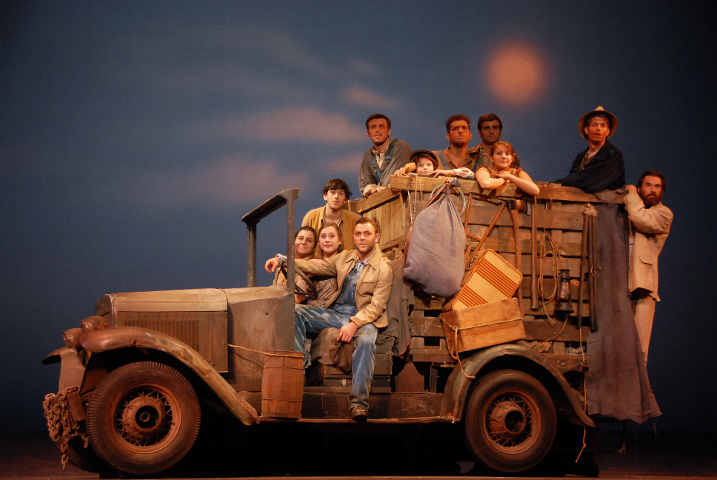
“These goddamned (immigrants) are dirty and ignorant. They are degenerate, sexual maniacs. These goddamned (immigrants) are thieves. They’ll still anything… They bring disease, they are filthy. We can’t have them in the schools.”
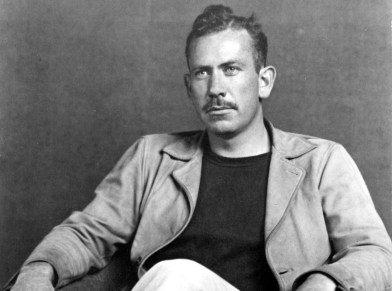
Sounds familiar? No, this is not a quote from a Donald Trump’s speech, nor from an European far right nationalist’s statement. John Steinbeck wrote these words back in 1939 to describe how local California folks thought of “Okies”, the migrant people from states such as Oklahoma, Kansas and Arkansas. His controversial novel “The Grapes of Wrath” won him a Pulitzer award in 1940, greatly contributed to his Nobel literature award in 1962, and was a bestseller in and out of the USA. At the same time, it was largely criticized, banned from schools and public libraries, and even burned.
But the value of “The Grapes of Wrath” is intransitive. Due to its imaginative writing style and the touching story of the migrant people searching for a better life, this masterpiece of American literature still resonates in the contemporary world. However, the author’s vews on agricultural industrialization and on capitalism in general have been proven wrong by history.
The drama of the Joads family who lost their land due to the Dust Bowl phenomenon and went to California searching for better opportunities is something I can identify with in many ways. Born in Bulgaria, I spent 20 years in Greece, and recently moved to the USA. Being a foreigner and different is something very familiar to me. At the same time, because of the refugee crisis in Europe, I could very easily be empathetic with Californians and their fears towards the migrants.
In this article, I will analyze John Steinbeck’s literary genius – his powerful images of nature, his innovative combination of lyrical writing with editorial prose, the rich spectrum of characters only within the Joad family itself with their leaders and executors, tragic figures and dodgers. John Steinbeck is a master of literature; however, his philosophy has some shortcomings and they will be examined too. The writer failed to foresee the real importance of the agricultural industrialization and the fact that it had no alternative. His total denial of capitalism and its financial institutions does not pass the test of time either. Steinbeck’s flat image of the insensible and horrible Californians is in a striking contrast with the vivid, cinematic characters of the migrant people.
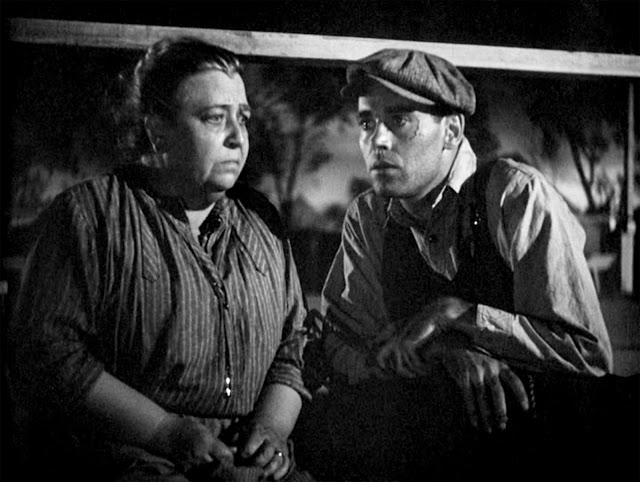
“The Grapes of Wrath” will be remembered in literary history with its virtuoso way of portraying the Joad family. The main characters are Tom and Ma Joad. They are also the strongest characters who take initiative, make decisions, and find solutions. Tom is described as a phisically strong man with new, cheap clothes too small for his body. He smokes cigarettes and drinks whisky – back in 1930-1940 this was a sign of a modern person. His behavier shows self-confidence, that he is in charge of the things that happen to him. “They give ya hell if ya rise hell. You get along – OK,” this is Tom’s philosophy. Whatever happens to you, try to benefit from the situation. He spent 4 years in jail where he learned how to read, write, and drive. If I had to give him a nickname, it would be The Solution-Finder. These kind of people are more likely to succeed in a new place.
Ma Joad is “heavy but not fat, thick with child-bearing and work.” She has “delicate hands, like those of a plump little girl.” Steinbeck portrays her as “the citadel of the family,” and creates the impression that she is somehow superior than Pa. Her wisdom is simple: “I am not scared. It is too much – livin’ too many lives. Up ahead they’s thousan’ lives we might live, but when it comes, it’ll be only one.” In every moment, Ma very well knows who in the family needs her support and attention most, and is there to help. Her nickname would be The Hardworker. She is the silent force that every family needs behind to keep the unity.
The young men in the family, Al and Noah Joad, and Connie are the weakest characters in the novel. They do not want to take responsibility for anybody else but themselves, and are easily disappointed with the first difficulty. Al is the mischievous younger brother of Tom who is mainly interested in girls and cars. He does not see his future in the family and prefers to live independently. Noah is the silent brother who has low self confidence and has no courage to face Ma when he desides to abandon the family. Connie is the sneaky husband of Joad’s daughter Rose-of-Sharon. He creates a mountain of big expectations for his wife. When the times became difficult, he confesses to her “If I’d of knowed it would be like this I wouldn’ of come.” Connie leaves the family without saying good-bye to anybody.
The other male characters, Pa and Uncle John, are perfect executors, they never challenge the leadership of Tom and Ma, but never step up to the plate. Pa has “failing, bright dark eyes,” “short, heavy and strong legs,” and “his face was all drown down to the forceful chin”. Uncle John is Pa’s elder brother who feels guilty for his wife’s early death . Although he has his rare drinking moments, he is very hardworking and suportive. At the end of the novel Uncle John is a transformed person who makes the desision not to bury Rose-of-Sharon’ stillborn baby. He ”set the box (w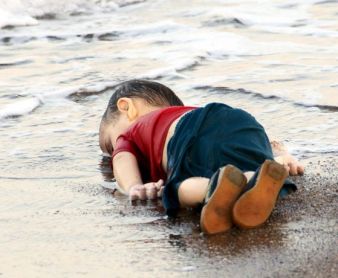 ith the baby) in the stream and steadied it with his hand,“ so it could reach the local Californians and tell them the truth about the dramatic strougle of the migrant people. He said fiercely,”Go down an’ tell ‘em. Go down in the street an’ rot an’ tell ‘em that way. That’s the way you can talk. Don’ even know if you was a by or a girl. Ain’t gonna find out. Go on down now, an’ lay in the street. Maybe they’ll know then.” Ironically, even now in the begining of 21st century, we still realize the drama of the immigrants through the death of a migrant child. The photo of the 3-year Ailian Kurdi, whose body was found drowned at the Turkish coast, speaks more than a thousand words.
Last but not least, Joad’s daugter Rose-of-Sharon is the most tragic character in the novel. In the beginning of the story, she has big expectations and great dreams for an easy life. At the end, she is broken-hearted because she has lost her husband and her stillborn baby. At the same time, she brings hope for a better future. Ma asures her: “You will have many other babies.” At the end of the book, Rose-of-Sharon saves the life of a starving man by breastfeeding him – a kind of a divine act that brings bright feeling and optimistic ending of the story. An eternal characteristic of the human being. 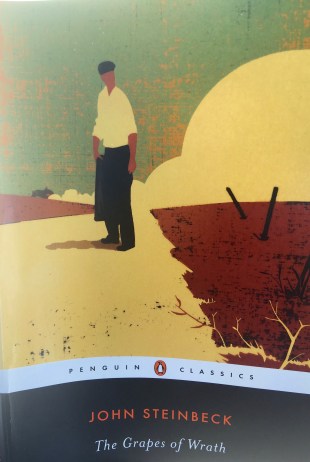
Nature is another important “character” in “The Grapes of Wrath”. The novel starts and finishes with natural disasters proving to us, contemporary readers, that climate change is not a recent phenomenon. In the begining of the story, John Steinbeck creates the powerful image of the draught during the Dust Bowl. In his poetic universe, the wind “cried and whimpered over the fallen corn,” the earth is “crusted,” the stars “could not pierce” the sky that is “pale”, and the corn “is flared down by the sharp sun”. The story ends with the deadly floodings and the author again uses metaphors to make us feel the catastrophe. “Grey clouds marched it from the ocean,” “the wind blew fiercely and silently,” “the earth whispered under the beat of rain,” the hills are “green, round and soft as brests”.
In “The Grapes of Wrath”, the reader sees the world of 1930s’ America through the eyes of the Joad family, and also through the eyes of Steinbeck himself. In so-called interchapters, the writer leaves his characters and executes directly the narration as journalist, political activist, and analyst. A small lesson in history, how Americans took California from Mexico, scenes of natural disaster, migrants’ adventure along the long road to the West, social and economic analyses that show clashes between two worlds. The author collects all his understanding of the society in these interchapters.
John Steinbeck unique writing style is well researched and taught in schools and universities worldwide. However, he wasn’t that lucky with his philosophical beliefs. The writer didn’t understand the importance of agricultural industrialization and described it as a purely bad thing. His main argument is “One man on the tractor can take the place of twelve or fourteen families.” Today we witness similar issues, for example, with the inevitable closure of coal mines and the introduction of green energy plants that will employ not more that 1/10th of the working force in the mines. But that doesn’t mean that green energy is bad.
In The Grapes of Wrath the tractor is described as unhuman and its driver “did not look like a man: gloved, goggled,… he was a part of the monster, a robot in the seat.” But he is also a better educated person than the farmers and the author seems to not recognize this. Steinback goes even further by saying “There is a little difference between the tractor and the tank.” He is very clear “The tractor does two things – it turns the land and turns us off the land.”
In general, the writer’s view on capitalism is unfavorable. Yes, we all agree that capitalism is not perfect, however it doesn’t have an alternative. The communist type of economy is not sustainable, and it is historically proven that capitalism is more humane than communism. Of course, now we have clear evidence of the crimes of communism, that back in the 30s-40s western societies didn’t have at their disposal. That could be an explanation why John Steinbeck despises bankers and representatives of the big industries.
For him, bankers are people who “worship math”, they “breathe profit and eat interests on money”. Bankers are arrogant, they “drive closed cars”, and “talk out of windows”. They are “caught in something larger than themselves.” Steinbeck gives us his understanding of the role of the financial institution: “The bank is something else than men. It happens that every man in a bank hates what the bank does, and yet the bank does it. The bank is something more than men, I tell you. It’s the monster. Men made it, but they can’t control it.” I am sure even today, some people such as members of The Occupy Wall Street movement would agree with these words. I personally have lived in an economy with no banks and could assure you that banks make the life of everybody much easier.
Steinbeck has the same negative attitude towards big entrepreneurs, people who create jobs and employ workers. In The Grapes of Wrath, he speaks about “the ridiculousness of the industrial life” that pushed the farm people to the highways to migrate in western states. The author calls the employers “men of property” who are “terrified for their property.” The cannery technology is viewed not as a great innovation to preserve food and therefore fight hunger. It is viewed as a subtle way to make bigger profit.
Big owners are cruel. They “squirt kerosine on the oranges,” “burn coffee for fuel,” “burn corn to keep warm,” “dump potatos in the rivers and place guards along the banks to keep the hungry people from fishing them out,” they “slaughter pigs and bury them”. Enterprenuers do these horrible actions because they are horrible people. In Steinbeck’s world they don’t even deserve to have names. While the migrant people are described with a variety of characters, the big owners are flat image with no shades.
John Steinbeck doesn’t like Californian people either. They are “a horde of tattered, feverish Americans” who have stolen California from Mexicans. “They imported slaves, although they did not call them slaves: Chinese, Japanese, Mexicans, Filipinos.” They gave the contemptuous name “Okies” to the migrant people. “Western states are apprehensive, they are scared by the widening government, new taxes, growing labor unity.” Instead of helping migrants find jobs and better life, locals “formed units, squads, and armed them with clubs, with gas, with guns.”
The only exeption is Mr. Thomas, the local businesman with “scowled brows,” face with redness that “deepened with anger,” and “breath panting through his lips.” He hired Tom and his friends for 5 days and Farmers’ Association pressed him to decrease workers’ wages. Mr. Thomas is a good man. He is the one who warns Tom and his friends that the Association is planning provocation in the government camp during the dance night. But his character is very episodic, he appears only in Chapter 22.
In conclusion, I would say that John Steinbeck is brilliant when describing the universal drama of the migrant people. His talent in building characters and crafted use of metaphor and allegore brought him to the short list for the Nobel prize in 1962. “There aren’t any obvious candidates for the Nobel prize and the prize committee is in an unenviable situation,” Henry Olsson, a member of the commettee wrote. On the occasion of the award, The New York Times wrote that the significance of his books was “watered down by tenth-rate philosophizing”. This controversy continues until today.
 Maria S. Topalova Blog
Leave a comment